
A reflection on AI, human pace, and the meaning we cannot surrender, even as the world accelerates around us.
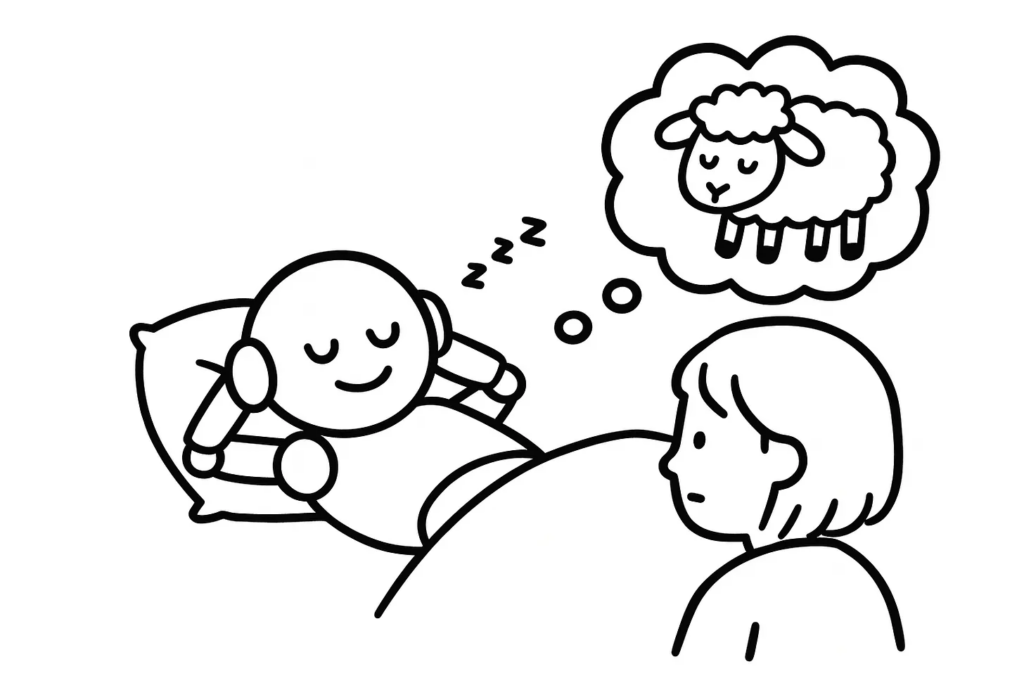
“Do Androids Dream of Electric Sheep?” Philip K. Dick
That question, once science fiction, now feels close to reality.
As AI agents begin taking over human tasks, the real fear is not machines replacing us, but humans being forced to work like machines.
The Silent Revolution: The Vanishing Jobs
In the 1950s, there were over 350,000 telephone operators in the U.S. They manually connected calls, saying, “Connecting you to line three,” with astonishing speed and precision. Today, that entire occupation has vanished. When you place a call now, you interact only with silent circuits.
The trading floor has changed too. Once filled with brokers shouting and waving paper slips, it’s now dominated by algorithmic trading that moves in milliseconds, far beyond human comprehension.
In both cases, the same thing happened: machines took over communication and coordination because meaning wasn’t required. A switchboard doesn’t feel satisfaction in helping you. An algorithm doesn’t sense fear or excitement. Machines run on power and maintenance, not meaning.
The Ultra-Fast Meeting of AI Agents
Imagine a strategy meeting run entirely by AI.
The Sales AI, Marketing AI, and Finance AI exchange millions of data points per second, analyze a decade of market data, and simulate millions of scenarios to find the optimal plan. Then a human manager interrupts:
“Hold on, can you explain the intent behind this strategy?”
To the AIs, that’s like a pedestrian stepping onto a racetrack at 300 km/h. The meeting crashes to a halt.
The Tragedy of Humans Thinking at Machine Speed
The real danger isn’t automation, it’s expectation.
What happens when organizations tell people to work at the same speed as AI?
At 9 a.m., you open your inbox: 180 emails.
Your assistant AI says, “All replies required within two minutes.”
No lunch break. AIs don’t eat.
At 5 p.m., as you reach for your coat, it reminds you to “handover to the night-shift AI team.”
How long before burnout sets in? How long before you start asking, Why am I doing this at all? Humans need meaning to stay alive.
The Illusion of “Managerial Safety”
Some claim humans will simply supervise AI.
But imagine monitoring a fully automated system:
a dashboard of metrics updating in real time while countless AIs work behind the scenes.
All you see is a reassuring green light: System normal. It’s like watching a movie in a language you don’t understand.
When the inevitable crisis hits, will you know what to decide? Without understanding, managers become button-pushers of approval, not leaders.
Designing Work That Still Means Something
We must design meaningful work, not just efficient processes. That’s not idealism; it’s a design principle.
- Clarify Purpose. Why does this work exist? Who benefits?
AI pursues efficiency; humans pursue purpose. - Respect the Human Pace. Don’t confuse speed with progress.
Allow time for reflection, dialogue, and trial and error. - Create a Sense of Growth.
Let people feel that they’re learning, improving, and making a difference.
Human Uniqueness as the Ultimate Differentiator
AI never asks why. It executes. Humans do endlessly, sometimes painfully.
That questioning is the source of innovation, ethics, and creativity. Our inconvenient curiosity keeps progress humane.
Defending the Right to Dream
When machines start dreaming of electric sheep, what should we dream of?
To dream meaningful dreams, to pursue values and ideals that can’t be optimized, and to build work that turns those dreams into reality.
Technology will keep advancing, but we can still choose not to live like machines.
Now is the time to defend three human rights that no algorithm can claim:
- the right to work with meaning,
- the right to seek purpose, and
- the right to dream.
Because in the end, we are not powered by code or energy.
We are powered by meaning.