Structural Intelligence
From systems you keep running
to systems that run.
The behavior you want, arising from the structure itself, not from someone holding it together.
Semantic Flow | Structural Intelligence | Soralist, Inc.
The invisible work
It doesn’t look like a problem. That’s the problem.
Most organizations already have the systems they need. Process, KPIs, CRM, AI, meetings, review cycles, manuals, training. This is not a story about what’s missing.
What’s worth looking at is the work that keeps growing just to keep those systems running. Checking, chasing, explaining, aligning, re-confirming, handling exceptions, reworking, taking things back over.
Is that the real work? Or work that appeared only to make the system hold?
Often the reason things don’t stall is that someone is quietly filling the gaps. And because nothing stalls, who is carrying what tends to stay out of view.
Any of these sound familiar?
Checking and aligning aren’t bad in themselves. The question is whether they’re the real work, or work that grew up around the system to make it hold.
Change the person or the tool, and the same adjustments come back
You changed who owned it. You changed the tool. You changed the process. And after a while, the same checking and aligning returned.
Swapping the people or the systems may leave untouched the conditions that generate the behavior in the first place.
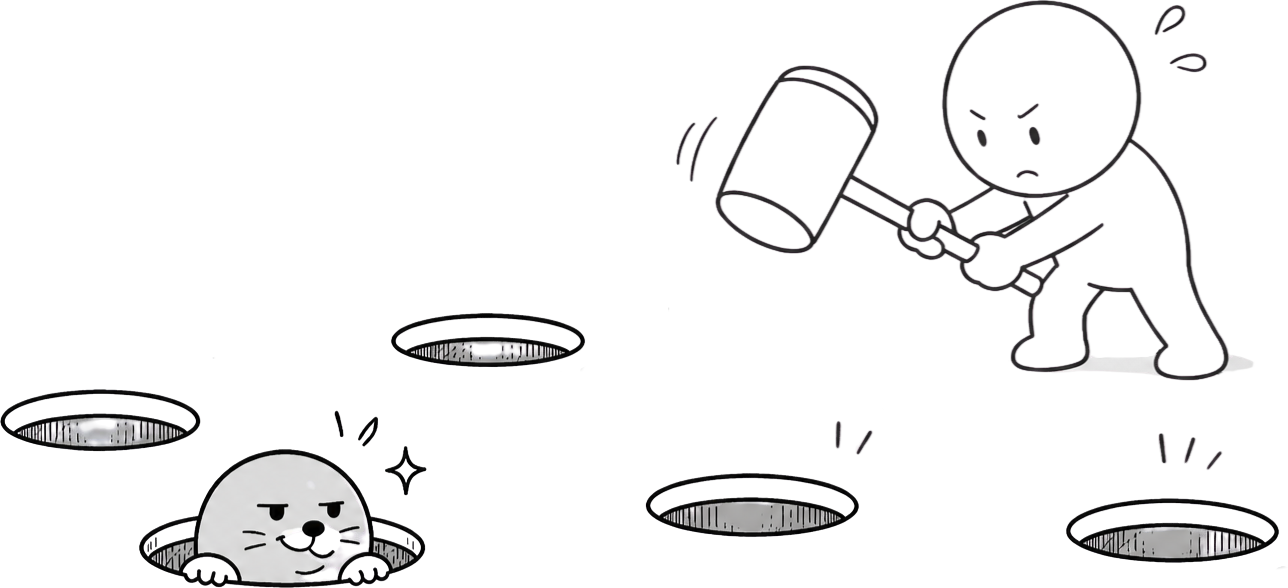
The more you add, the more there is to keep running
New tool
New KPI
New meeting
New rule
New AI
New check
Each new system is sound on its own. But if the conditions that generate behavior haven’t changed, the same checking, explaining, interpreting, aligning, and exception-handling tend to form around the new system too.
Most organizations can build systems. Fewer have designed the conditions under which a system actually lands as behavior and keeps running on its own. AI and rising complexity make it harder to close that gap through human judgment and adjustment alone.
The same system, different behavior
What decides how a system moves is the conditions around it
Under one set of conditions
People keep it running
It holds only because people keep stepping in
Behavior it generates
Direction
Adjusting
Checking
Exceptions
Under a different set of conditions
It runs on its own
The needed action happens without any special push
Behavior it generates
Continues without special intervention becoming the norm
This isn’t about better or worse, or about effort. It’s a difference in conditions.
Designing a sound system and having the behavior you want emerge from it are two different things.
The theory behind it
People don’t execute systems. They interpret them.
People don’t carry out rules and structures mechanically. They act on what those structures mean to them: whether the action makes sense, whether it reads as theirs to do, whether they can make the call it requires, and whether they can see it through.
The same design can activate one team and stall another. Semantic Flow treats meaning as a variable and describes the conditions under which a system lands as human behavior, and why it tends to hold or not.
A note on what output rests on
Structure
The arrangement of conditions that shape behavior.
Gap-filling
The adjustments people make to keep a system working. Neither good nor bad in itself, but worth seeing clearly.
Meaning condition
The condition under which an action becomes possible for the person doing it.
Output that looks fully structural is often part system and part gap-filling. Seeing the difference is the point of observation, and it isn’t a verdict on anyone’s performance.
Before adding another system, look at what generates the behavior
Structural Intelligence is the practice built on Semantic Flow. It observes how outcomes are actually being held together today, and defines the conditions an implementation needs to meet so the behavior you want keeps arising from the structure.
Looking at the present isn’t about explaining today and stopping there. It’s so the conditions your next system has to meet aren’t decided by guesswork.
The first step
Structural Discovery
120 minutes | No preparation needed | Owner plus key members
Take one outcome or one operation, and look at the behavior and conditions that keep recurring around it
A paid 120-minute session where the owner and key members observe, for the first time, what conditions are actually holding a given outcome or operation together.
It’s not where solutions get decided, and not where a structural diagnosis is finalized.
It puts into words, as a structural hypothesis, what your current results rest on and what behavior is arising from which conditions, so you can judge whether it’s worth defining the conditions for the behavior you want in full.
Define the conditions, then keep watch on them
Structural Navigation
Ongoing engagement | Purpose: implementation and operation checked against the conditions
Define the conditions, and watch how they hold
An ongoing engagement that reviews how outcomes are currently being held together and defines the conditions an implementation needs to meet, so the behavior you want can arise on its own.
What we define is not tool requirements or process requirements. We define the conditions needed for the behavior to arise without people having to sustain it, check implementation options against those conditions, and keep observing the structural state over time.
What to implement is decided by you and the specialists in each area. Structural Navigation checks whether the proposed implementation sits within the range where it can hold.
Observation and analysis
Insights
-
Your results are real. But are they structural?
Results are coming in. Revenue is growing, projects are moving, and initiatives are active. From the outside, there is no obvious problem, and often from the inside, it feels the same. And yet, certain patterns begin to appear. Some people carry more than they should. The same problems return across…
-
Can AI run on your structure?
Most organizations are moving fast on AI. Tools are being introduced. Use cases are expanding. Capabilities are clearly increasing. Tasks become faster, information is easier to access, and decision support improves. From a capability standpoint, AI works. And yet, in many organizations, something doesn’t translate. Adoption remains uneven. A few…
-
What your top performers are really doing
In most organizations, there are always a few people who consistently deliver. They close the hardest deals. They move stalled projects forward. They handle situations others cannot. They are often described as highly skilled, experienced, or exceptionally capable. And to some extent, that is true. But if you look closely…
-
Why your best people keep leaving
In many organizations, a familiar pattern emerges. The most capable people carry more. They take on the hardest problems, step in when things are unclear, and hold things together when they start to break. This is rarely assigned. It happens naturally. When something is difficult, ambiguous, or high-stakes, it tends…